
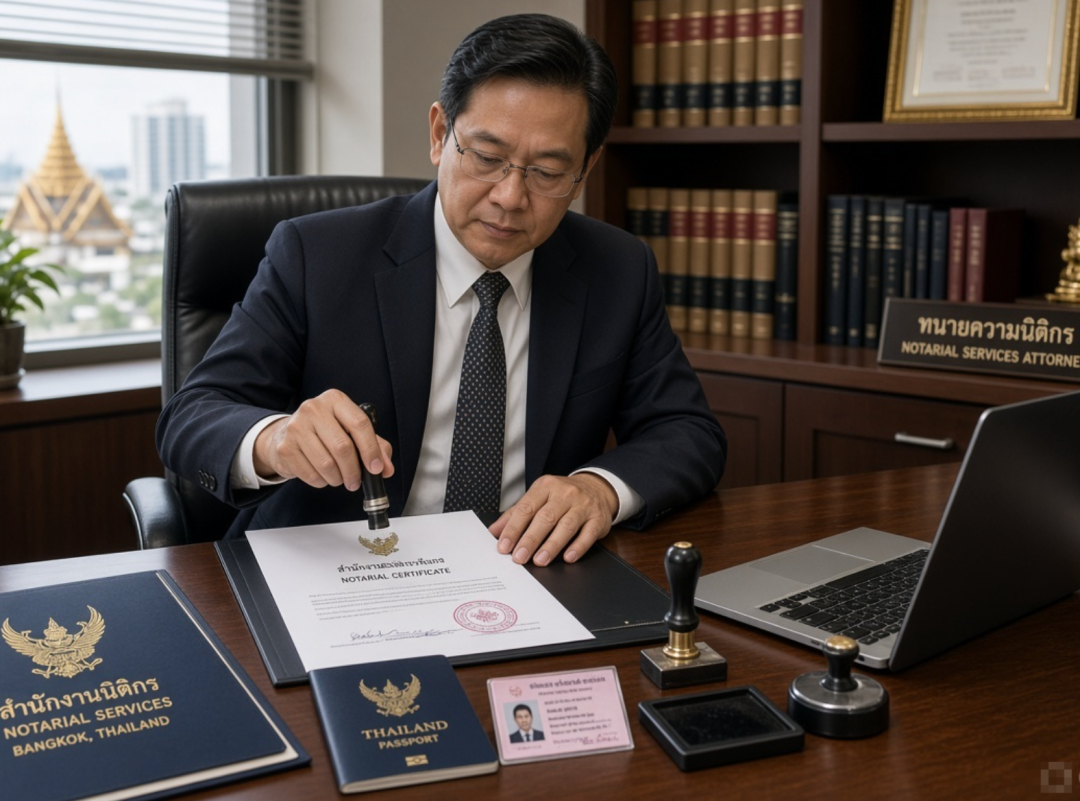
Are there no notaries in Thailand? How to handle document authentication for overseas use? Is the Hague Apostille Convention coming soon?
Gongshitong · Global Notarization and Authentication
Does Thailand have notaries? How to authenticate documents for overseas use?
Is the Hague Apostille coming soon?
A Clear Guide to Thailand's Notarization System and Authentication Process
Many people encounter requirements for "notarization plus consular legalization" when applying for visas, studying abroad, immigrating, or purchasing overseas property. Thailand is unique: it lacks traditional notaries but offers a practical alternative system. Today, we'll clearly explain Thailand's notarization framework, the authentication process, and its recent accession to the Hague Convention in simple terms.
01
Thailand actually has no "official notaries."
In many countries, notaries are independent officials appointed by the government to witness signatures and authenticate documents. However, in Thailand,No such official position exists。
Instead, it is served by a subset of practicing lawyers authorized by the Lawyers Council of Thailand.Notary Public Attorney。
They perform notary-like duties under the Legal Services Act, primarily serving documents intended for use abroad.
Summary in one sentence:In Thailand, a "Notary" is a lawyer who has completed additional training and registration.
02
What exactly can they do?
The core work of these notary-at-law professionals is to ensure documents "make sense" internationally. Common services include:
Auth Signature: Confirms voluntary in-person signing by the individual. Applicable to authorization letters, contracts, declarations, and similar documents.
Certified True Copy: Certified copies of documents (passport, ID card, birth certificate, company documents, etc.).
Certified Translation: Confirm the translation matches the source text.
Administer Oath: For use in an Affidavit.
Witness SigningVerify identity and witness the entire signing process.
These certifications may not be widely used domestically, but they become crucial once you go abroad—especially for visas, business transactions, property transfers, and inheritance.
03
Is it hard to become a "Notary Public"?
The requirements are quite strict:
Must be a licensed Thai practicing attorney (Thai citizen, legal background, and passed relevant examinations).
Complete the professional training courses assigned by the Bar Council and pass the assessment.
Formally register as a "Notary Public Attorney" and renew periodically.
Strictly regulated by the Bar Council; must remain impartial and independent.
Ordinary lawyers or non-lawyer personnelUnauthorized to issue recognized notarial documentsWhen processing, ask the other party directly if they are registered with the Law Society, or verify on the official website yourself.
04
Can I use it immediately after notarization, or is "consular legalization" also required?
Notarization is just the first step.If the document is to be used abroad, it typically requires the full consular legalization process (commonly known as "double authentication"):
This setNotarization → Ministry of Foreign Affairs → EmbassyThe chain of apostille is the traditional method for international document authentication. Fees and processing times vary by document type and destination country; it is recommended to confirm specific requirements with the receiving institution in advance.
05
Great news: Thailand has officially joined the Hague Convention!
The cumbersome dual authentication that has long been a pain point is about to be significantly simplified.
2025-12-9: Thailand's Cabinet officially approved accession to the Convention on the Elimination of Foreign Public Document Authentication Requirements (commonly known as the Hague Apostille Convention).
2026-6-30: Deposited the instrument of accession with the Depositary (Ministry of Foreign Affairs of the Netherlands), becoming the130one contracting party.
2027-2-28: Convention for ThailandEffective immediately。
Once effective, public documents used in other Hague Convention member states will only require a single certification stamp from the competent Thai authority.Hague ApostilleYou can use it directly without going to the embassy for double authentication. This will significantly save time, money, and effort.
Please note:As of 2026 and 9, the Convention is not yet in force. Please continue to follow the previous procedures. Once it takes effect, some countries that raised objections may still require consular authentication. Refer to official notices for details.
✦
Helpful Tips
01 Before applying, confirm exactly what the receiving institution requires: notarization only, Ministry of Foreign Affairs authentication, or full dual legalization?
02 Select a notary lawyer who is officially registered to avoid invalid documents.
03 Please prepare the original documents, proof of identity, and translated copies in advance.
04 After the Hague Convention takes effect, monitor the latest guidance from the Thai Ministry of Foreign Affairs or the Lawyers Council.
Thailand's notary system may be non-standard, but it's highly practical. Understanding the rules helps you avoid unnecessary detours.
If you're processing these documents, we recommend planning ahead, especially2027-2-28Processes may vary significantly depending on the region. Hope this guide helps you navigate complex authentication with ease!
Have specific questions? Feel free to leave a comment and let's chat ✍️