
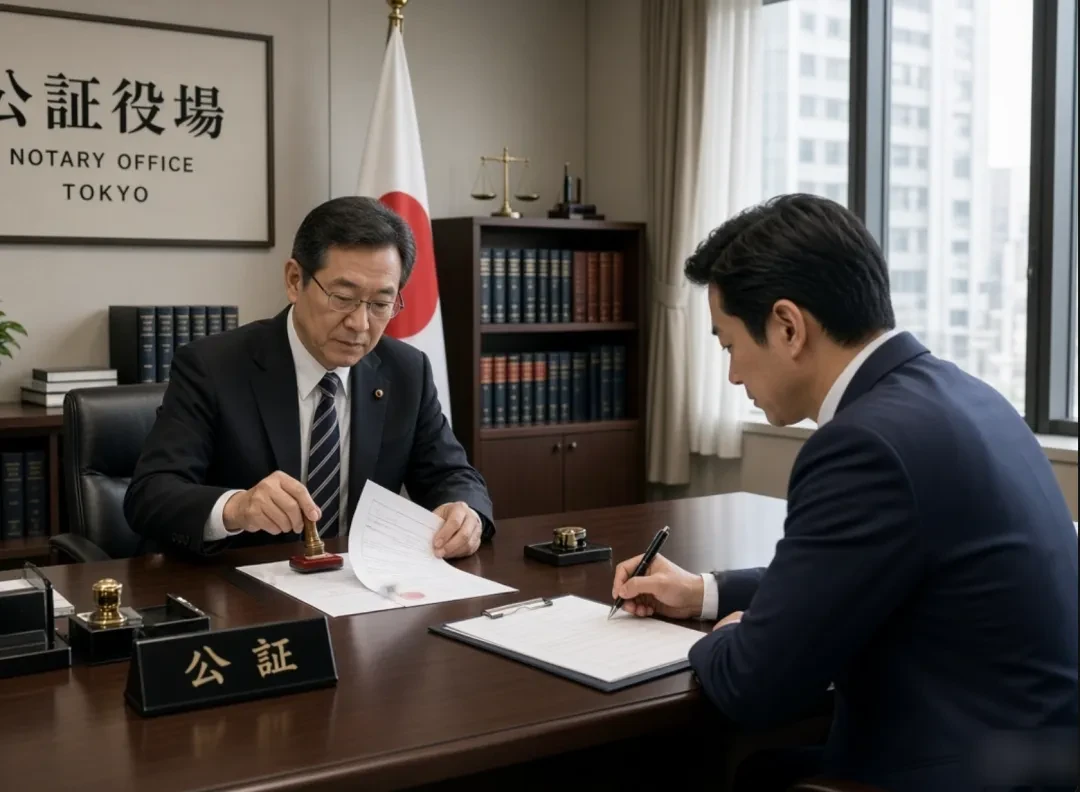
Japan Notarization vs. Apostille: Avoid the Mistake 90% of People Make
Japanese Notarization and Apostille Certification
Stop the confusion!90% of people fall into this trapAvoid this in one article
🔍 Explained in Depth · Save for Later
Gongshitong | Global Notarization & Authentication
Many people are confused by the terms "notarization" and "Apostille" when using Japanese documents abroad or bringing them to China for the first time.
"Does everything wrap up once notarization is complete?" "Is apostille just an advanced version of notarization?" "Now that China has joined the Hague Convention, can I skip all the formalities?" These are common misconceptions. Today, we'll cut through the jargon to clearly explain the core differences, processes, and top pitfalls between the two.
First, let's break down the concepts: they are not the same thing.
🏛️ Japan NotarizationNotarization / Foreign Document Authentication
Notarized by a Notary Public at the Japanese Court of Justice
Mainly targetsPrivate Documents(Files created by individuals or companies, such as powers of attorney, declarations, contracts, translations, resumes, etc.)
Notary Public primarily certifies:Signature is by the user., orCopy matches original。
⚠️ Important:General Notary Public in JapanDoes not verify the authenticity of file contentmerely proves "formal validity." Public documents (such as certified household registration extracts or certificates of registered matters) generally cannot be notarized directly.
🌍 Hague ApostilleApostille
Processed by the Ministry of Foreign Affairs of Japan
An Apostille issued under the 1961 Hague Convention Abolishing the Requirement of Legalisation for Foreign Public Documents, certifying that the public document bearsSeals and signatures are issued by authorized, genuine individuals.。
When used in countries party to the Hague Convention, it serves as an equivalent to traditional "consular legalization," and the receiving country typically does not require additional authentication from its embassy or consulate in Japan.
📌 One-sentence summary of the difference:
Notarize= Transform private documents into official documents recognized by the Ministry of Foreign Affairs.
Apostille= Attach an "international passport" to official documents (or notarized documents).
They are sequential, not replacement.
II. Standard Processing Procedures (Public Documents vs. Private Documents)
📂 1. Official Document
Official documents such as certified copies of family registers, resident certificates, statements of registered matters, criminal record checks, and tax clearance certificates can generally be submitted directly to the Ministry of Foreign Affairs for Apostille certification, provided they meet requirements such as being issued within the last 3 months and bearing the issuing authority's name and official seal.
📄 2. Private Document
Power of Attorney, Authorization Letter, Corporate Resolution, Translated Documents, Private School Certificates, etc., must follow the complete chain:
Notary Office
Obtain Notary Certification
② Local Legal Affairs Bureau
Notary Seal Certification (may be combined in some regions)
Ministry of Foreign Affairs
Get an Apostille
🚀 All-in-One Service (Highly Recommended)
Gongshitong can complete the task in one go.Notary Authentication + Legal Bureau Certification + MHLW Hague ApostilleSave the hassle of making multiple trips.
3. Pitfalls that 90% of people fall into(Self-check)
❌ Mistaking notarization for an apostilleSent abroad after notarization only, but was immediately returned by the recipient.Private documents must be notarized before authentication.
❌ Misconception: Hague Apostille certifies the "truthfulness of content"The Ministry of Foreign Affairs certifies only the authenticity of signatures and seals, not the truthfulness of the content. The issuing party remains fully responsible for the content.
❌ Ignore file expirationThe Ministry of Foreign Affairs generally requires official documents to be issued within 3 months. The original document itself (e.g., a Criminal Record Check) may also have an expiration period of 3-6 months, and the requesting party often specifies that it must be issued "recently."
❌ Skip notarization and contact the Ministry of Foreign Affairs directlyPrivate documents submitted directly to the Ministry of Foreign Affairs will be rejected. They must first be notarized by a public notary.
❌ You are unaware that China has joined the Hague ConventionStarting from 2023-11-7, qualifying public documents between China and Japan will, in principle, require only an Apostille from the other country, eliminating the need for consular legalization. This significantly simplifies the process, provided the documents fall within the scope of the Convention.
❌ Did not confirm if the destination country is a member of the Hague ConventionNon-Hague countries still require the traditional double authentication: MFA attestation followed by consular legalization at the Japanese embassy/consulate. Even for Hague member states, some institutions may occasionally request additional verification; confirm with the recipient in advance.
❌ Translation processing errorTranslations are typically treated as private documents and must be notarized together with a declaration. The language used should comply with the recipient's requirements (commonly Chinese-Japanese or Chinese-English).
4. Practical Tips✅ Avoid detours
1. Ask the recipient exactly what they need first.Notarization only? Apostille or Consular Legalization? Which language?
2.Prefer to haveOne-stop serviceNotary office, saving significant time and effort.
3.If you are in China or unable to attend in person, you may authorize an agent (with a power of attorney) or handle the matter through official channels.
4. Official authoritative source: Ministry of Foreign Affairs of Japan website (official seal certification/apostille), Japan Federation of Notaries Associations website.
5.For complex commercial documents, litigation evidence, or high-value transactions, consult a professional familiar with cross-border documentation to avoid costly mistakes.
🎯 Core Emphasis
Japanese notarization and apostille certification aren't complicated; the key is...Determine file type, follow the correct sequence, and confirm destination country requirements.Follow these tips to easily avoid 90% of common pitfalls. Spending ten extra minutes checking official requirements before applying is far more convenient than dealing with corrections afterward.
Good luck with your file processing! 🚀
❤️Save · Share · Shop with Confidence❤️
— This information is for reference only. Please follow the official requirements of the relevant institution for actual processing. —